


News
Premium Paper-Based Cat Litter
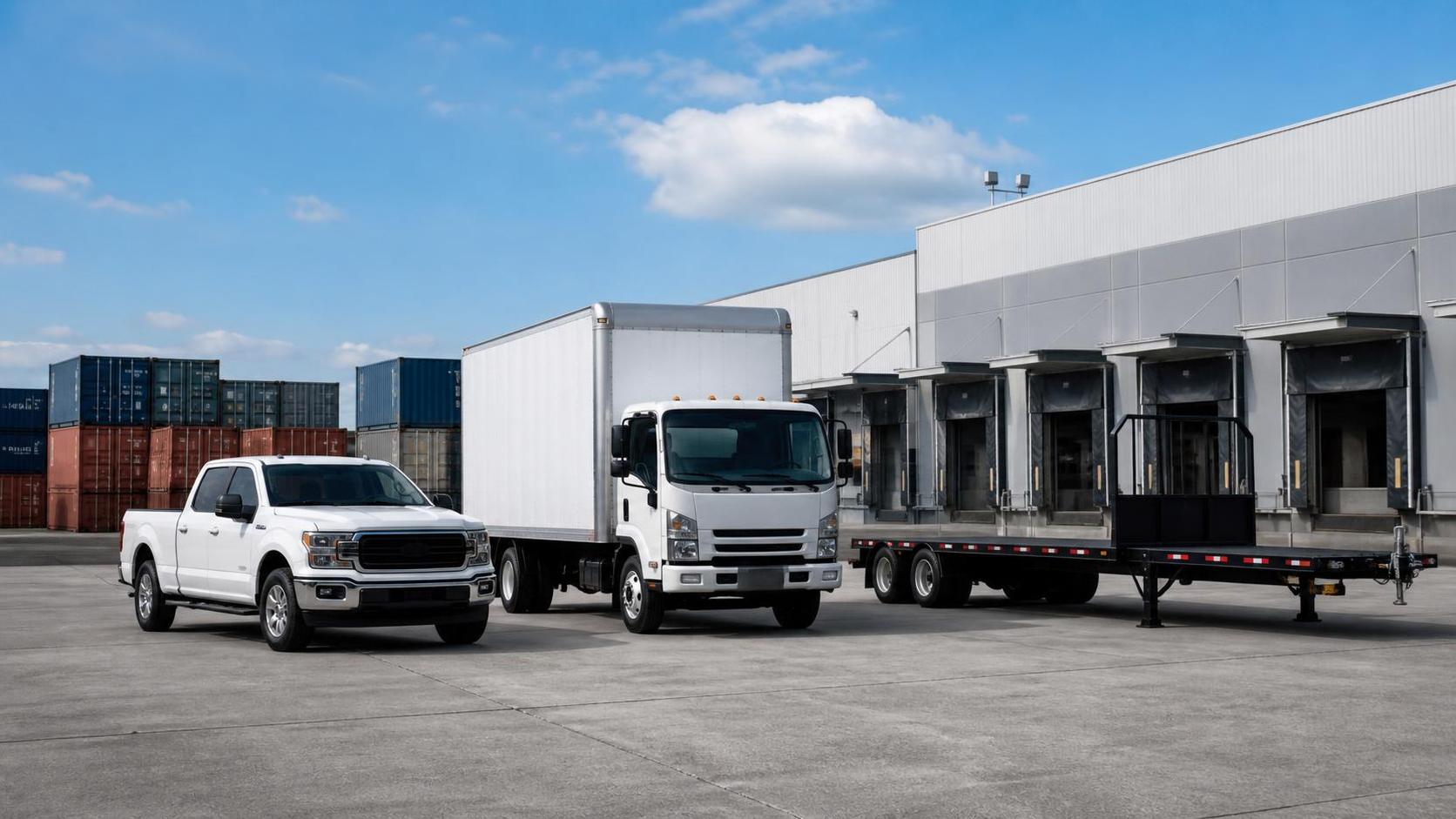
A fleet purchase often starts with a spreadsheet and a deadline. Procurement teams gather quotations, line up suppliers, and begin comparing Vehicle Sales offers by unit price, delivery lead time, and payment terms. On paper, the lowest number can look like the smartest move. In practice, that shortcut can become expensive very quickly—especially in the engineering vehicle sector, where uptime, parts support, local compliance, and load suitability have a direct impact on operations.
For buyers responsible for vans, trailers, pickups, passenger vehicles, or other transport units used in demanding business environments, a sales offer is never just a price quote. It is a package of assumptions about vehicle configuration, serviceability, life-cycle cost, and supplier reliability. If those assumptions are not tested early, procurement risks showing up later in the form of delays, maintenance issues, idle assets, or vehicles that do not perform as expected in the target market.
That is why experienced buyers look beyond the offer summary and ask a more useful question: what exactly am I buying, and what will it cost my business over the full operating period?
Start with the real job the fleet needs to do
Before comparing suppliers, clarify the operating profile of the vehicles. This sounds obvious, but it is where many procurement mistakes begin. A pickup used for light site visits is a different asset from a pickup expected to carry tools, materials, and personnel over uneven roads every day. A trailer moving general cargo on established highways is not the same as one serving construction zones or remote project areas.
When Vehicle Sales offers arrive, they may appear comparable because the product category is the same. Yet the actual specifications can differ in ways that matter: payload, axle setup, engine output, suspension type, tire selection, cargo body dimensions, fuel configuration, cabin features, or climate suitability. If the procurement brief is vague, suppliers will quote against different assumptions, and the comparison becomes misleading from the beginning.
A more disciplined approach is to define a use-case checklist before evaluating offers:
- Typical load and peak load conditions
- Road and terrain conditions
- Average daily distance and annual mileage
- Fuel availability in the destination market
- Driver comfort and safety requirements
- Expected service interval and maintenance environment
- Regulatory or project-specific vehicle requirements
Once this baseline is clear, you can judge whether an offer fits the operation rather than simply fits the budget.
Check whether the quoted vehicles are truly equivalent
Many procurement teams make side-by-side comparisons too early. They assume that two offers for the same vehicle type represent equal value, when in reality one may include upgraded components, a different drivetrain, or added support services. Another may look cheaper because key items were excluded.
Ask for a complete configuration sheet, not just a model name. In engineering vehicle procurement, small specification changes can significantly affect durability and maintenance frequency. A trailer with a lower-cost structural setup may still meet the quote request, but under heavier duty cycles it may generate more downtime. A van selected without considering local parts availability may become harder to keep on the road. A passenger transport unit with unsuitable cooling performance for hot climates may create complaints and productivity loss.
When reviewing Vehicle Sales offers, confirm these areas line by line:
- Exact model and trim or work configuration
- Manufacturing origin and brand source
- Engine, transmission, and axle details where applicable
- Rated payload, towing capacity, and body dimensions
- Standard equipment versus optional equipment
- Included accessories, tools, and documentation
- Packaging, shipping scope, and delivery condition
If one supplier quotes on a ready-to-operate basis and another quotes only the basic vehicle, the price gap may have very little meaning until the offer is normalized.
Supplier credibility matters as much as product selection
Procurement professionals know that a vehicle order is also a supplier risk decision. The right partner reduces friction long after the contract is signed. The wrong one creates uncertainty every time a technical question, shipping issue, or parts request arises.
So before comparing price alone, look at the seller’s operating depth. Do they understand export procedures? Can they explain market-specific configuration differences? Are they familiar with commercial vehicle sourcing from recognized manufacturers? Can they support mixed fleet needs rather than pushing a single model that may not fit every application?
For companies sourcing from China, this becomes especially important. A capable vehicle dealer should be able to provide access to a broad range of products, such as vans, trailers, pickups, and passenger vehicles, while also helping buyers navigate practical details around model selection and cross-border procurement. Businesses like Haowo Automobile Sales and Service (Liaocheng) Co., Ltd., which work with vehicle solutions from Foton Motor Group and other established manufacturers, reflect the type of sourcing model many international buyers look for: broad product access, export-oriented communication, and support aligned with varied regional requirements.
That does not mean every offer from a larger or broader supplier is automatically better. It means procurement should assess whether the supplier can support the full transaction cycle—not just the quotation stage.
After-sales support is a cost issue, not a courtesy issue
One of the most common buying errors is treating after-sales support as a secondary topic to discuss later. In fleet procurement, it should be part of the offer evaluation itself. A vehicle that costs less upfront but lacks practical support in service, troubleshooting, technical documentation, or spare parts planning can become the more expensive choice over time.
Ask specific questions:
- What warranty terms are included, and what are the exclusions?
- How are technical claims handled for export customers?
- Is there a spare parts recommendation list for the initial operating period?
- Can the supplier provide parts manuals and maintenance documentation in the required language?
- What is the process for urgent parts supply?
- Is remote technical support available when service teams need guidance?
For engineering vehicle fleets, even a short interruption in availability can affect project schedules. Procurement teams should therefore estimate the operational cost of downtime and compare that against any apparent savings in the original Vehicle Sales offer.
Parts availability should be verified by market, not assumed
A vehicle may be reliable in general terms and still be difficult to support in your country or project region. This is particularly relevant for international buyers operating across Africa, Central Asia, Southeast Asia, the Americas, or Europe, where local service networks, import practices, and component sourcing conditions can vary widely.
Do not stop at asking whether parts are “available.” That answer is too broad to be useful. Instead, identify the wear parts and common replacement items your operation is likely to need in the first 12 to 24 months: filters, brake components, suspension parts, lighting, seals, belts, tires, body fittings, and electrical items. Then confirm how those parts will be sourced, what typical lead times look like, and whether interchangeability or stocking plans are possible.
Procurement teams that buy for challenging environments often choose to negotiate an initial parts package together with the vehicle purchase. This can stabilize early operations and reduce uncertainty after delivery.
Compliance can quietly reshape the total cost
Even a strong commercial offer can fail if the vehicles do not match local legal or operating requirements. Imported engineering and commercial vehicles may need to satisfy emissions rules, dimensional regulations, lighting standards, safety requirements, homologation needs, or project-specific standards. In some markets, documentation gaps are enough to delay customs clearance or registration.
When reviewing Vehicle Sales proposals, verify:
- Whether the offered configuration meets destination market regulations
- What export documents are included
- Whether chassis and body specifications align with local road use limits
- Whether left-hand drive or right-hand drive requirements are correctly addressed
- Whether any adaptation is needed before registration or operation
This is not a paperwork detail to leave for the logistics team. It is a procurement issue because compliance gaps often lead to hidden costs, delayed deployment, and contract risk.
Delivery terms need more attention than buyers sometimes give them
A quote can look attractive until you study what “delivery” actually means. Is the price ex-works, FOB, CIF, or based on another term? Is inland transport included? What about packaging, pre-shipment inspection, export handling, and port charges? If the fleet order includes multiple vehicle types, does the shipping arrangement support consolidation efficiently, or will the buyer absorb extra coordination costs?
Lead time should also be examined carefully. A short promised production window is useful only if the supplier has a record of stable execution and clear communication. Procurement teams should ask whether the quoted vehicles are standard production units, configurable builds, or dependent on upstream factory scheduling. The answer affects planning confidence.
For engineering projects, delayed delivery can be more expensive than a slightly higher purchase price. A realistic timetable from a dependable supplier is often more valuable than an optimistic one that creates downstream disruption.
Calculate total cost of ownership, not just acquisition cost
This is where procurement creates real value. Instead of comparing only purchase prices, evaluate the expected full-life cost of each option. That includes fuel consumption, routine maintenance, tire wear, spare parts cost, repair complexity, operator training needs, expected service intervals, and residual value assumptions where relevant.
Two similar Vehicle Sales offers can produce very different total ownership outcomes. One vehicle may consume less fuel but require more specialized parts. Another may have a stronger dealer support structure and simpler maintenance, which lowers operational friction over several years. A slightly higher initial spend can be justified if it reduces downtime, extends service life, or improves fleet utilization.
If procurement has historical maintenance data from existing vehicles, use it. If not, ask suppliers practical questions rather than broad promises. For example, what routine service items should be planned? What tools or workshop capabilities are required? How easy is it to source replacement components in the destination region? These answers help build a more realistic ownership model.
Pay attention to communication quality during the quotation stage
How a supplier communicates before the deal often predicts how they will perform after the deal. Slow responses, unclear specifications, inconsistent documents, or vague answers to technical questions are not minor annoyances. They are early warning signs.
By contrast, a supplier that responds with complete specifications, asks relevant follow-up questions about the operating environment, and explains configuration choices is giving procurement more than a price—they are reducing decision risk. In international fleet buying, where distance can magnify every misunderstanding, clarity matters.
It is often worth scoring suppliers not only on price and product, but also on responsiveness, document quality, technical accuracy, and willingness to support evaluation. These factors influence the efficiency of the entire procurement cycle.
A practical way to compare offers without oversimplifying them
Many buyers benefit from using a weighted comparison matrix. Not because procurement should become rigid, but because it helps prevent price from crowding out everything else. A practical matrix might include technical fit, supplier credibility, parts support, compliance readiness, delivery certainty, after-sales structure, and total cost of ownership alongside quoted price.
The point is not to create artificial complexity. It is to make sure each offer is judged on the factors that affect fleet performance in the real world. A vehicle purchase for engineering operations is rarely a one-variable decision.
That is especially true when sourcing from suppliers serving multiple international markets. A dealer with broad export experience and access to products from recognized manufacturers may be able to support a more balanced decision by helping procurement align model choice, operating requirements, and support planning from the beginning.
Before you shortlist, ask one final question
If this fleet is delivered exactly as quoted, will it still look like the right choice after 12 months of operation?
That question shifts attention to what matters: reliability, supportability, suitability, and cost over time. Procurement professionals in the engineering vehicle sector are not simply buying assets. They are protecting project continuity, operating efficiency, and budget discipline.
So before comparing Vehicle Sales offers, pause long enough to test what sits behind the numbers. Check the specification depth, the supplier’s credibility, the service plan, the spare parts path, the compliance fit, and the life-cycle cost logic. The better that evaluation is handled upfront, the more likely the final purchase will support the business instead of surprising it.
Search
Send Us A Message
Please give us a message
Xinfada Import & Export (Shandong) Co., Ltd.
Location