


News
Premium Paper-Based Cat Litter
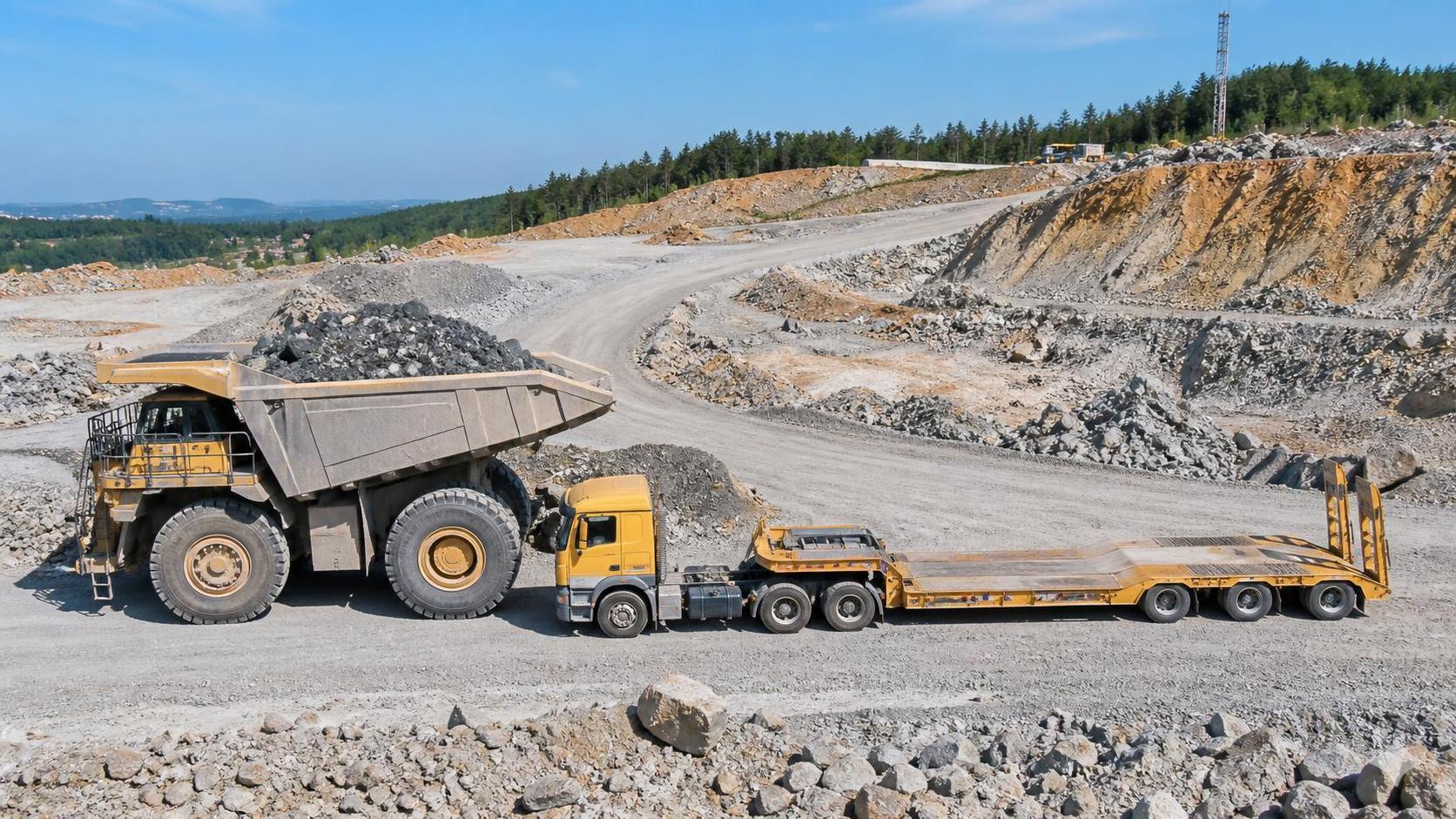
Transportation solutions for mining and construction projects should be evaluated against the actual movement task first: what material is being moved, how often, over what distance, on what surface, and under which loading method. A truck that performs well on a compacted haul road may become inefficient on soft ground, steep ramps, or narrow temporary access routes. In the same way, a trailer combination that suits long internal transfer distances may create delays where loading points shift every few days. The transport plan has to match the site rhythm, not just the nominal payload in a brochure.
Start with the material itself. Broken rock, overburden, sand, aggregate, cement, steel sections, prefabricated components, fuel, water, and maintenance tools all impose different demands on the vehicle body, axle loading, suspension, and discharge method. Abrasive material can wear floor plates quickly if body steel grade and thickness are underspecified. Wet clay may adhere to dump bodies and reduce effective volume unless body geometry allows clean release. Fine material can leak from poor tailgate sealing, while long fabricated items may require flatbed stability, tiedown points, and careful load distribution rather than high-volume capacity.
Match Vehicle Type to the Movement Pattern
Many selection mistakes come from combining unrelated transport tasks into one fleet decision. Mine haul inside the pit, short-distance earthmoving on a construction site, inter-yard transfer, and public-road delivery each call for different equipment logic. Off-road dump trucks are designed around traction, ground clearance, and repeated heavy cycles on rough haul roads. On-road or mixed-duty trucks need a different balance of speed, compliance, turning radius, and maintenance access. Trailers increase flexibility for certain loads, but they also change reversing space, ramp negotiation, and loading sequence.
Where loading is continuous and travel routes are repetitive, cycle time often matters more than top speed. The practical question is how long one complete loop takes from queueing at the excavator or loader, through travel, unloading, and return. A larger body may look attractive on paper, yet if it is too slow on gradients or too large for the loading zone, the actual moved tonnage per shift may fall. On constrained sites, smaller but more maneuverable units can maintain steadier flow and reduce waiting time around the face, crusher, batching plant, or stockpile.
Body configuration deserves close attention. Rear dump bodies are common for bulk material, but side tipper or trailer arrangements may suit specific unloading layouts. Flatbeds, stake bodies, and low-bed trailers fit equipment, pipe, formwork, or machinery transport better than general cargo bodies. Tank transport for water or fuel introduces surge, baffle design, pump compatibility, and contamination control issues that should be reviewed as part of the transportation solution rather than treated as a simple truck purchase.
Read the Site Before Reading the Spec Sheet
Terrain is rarely static on active projects. Temporary roads develop ruts, drainage changes after rain, and grade transitions become rougher as work progresses. Because of that, the basic site survey for vehicle selection should include ramp gradients, turning widths, underfoot condition, overhead clearance, and seasonal changes. In loose or wet ground, axle load concentration may damage access roads faster than expected and create a maintenance burden that is not visible in the initial transport budget. A lighter configuration making more trips can sometimes preserve road condition better than fewer very heavy trips.
Ground clearance, approach angle, departure angle, differential protection, and tire selection are practical factors, especially where trucks leave prepared roads and enter blasted areas, fill zones, or temporary embankments. Tire choice should reflect cut resistance, heat build-up, sidewall exposure, and availability of replacement stock. In remote areas, a theoretically ideal tire specification can become a weakness if supply lead time is long and the site has no buffer inventory.
Water crossings, dust, mud, and rock fragments also affect the intake system, braking components, electrical connectors, and chassis corrosion exposure. If the operating environment includes persistent dust, filtration service intervals should be reviewed alongside engine performance. If the route includes repeated downhill loaded travel, braking system specification and retarder suitability deserve more weight than they often receive during early comparison.
Payload Figures Need Context
Published payload or volume numbers are only useful when tied to material density, swell factor, moisture condition, and legal or structural limits on the intended route. A body sized for low-density overburden may overload axles when switched to wet aggregate. A truck selected around volumetric capacity may spend much of its time partially loaded if the loading tool cannot fill it efficiently in the available passes. Matching loader bucket size to truck body capacity is still one of the simplest ways to avoid wasted cycle time and uneven loading.
Axle distribution matters as much as gross capacity. Uneven loading increases tire wear, stresses suspension parts, and affects steering control on rough surfaces. For trailers, kingpin load, bogie position, and deck layout need to support the actual cargo shape rather than an abstract weight figure. When transporting equipment or fabricated assemblies, dimensions and center of gravity can create more risk than mass alone.
- A dense material stream may justify a smaller body with stronger wear liners and better stability.
- Long-haul internal routes often reward fuel-efficient driveline matching over maximum theoretical payload.
- Mixed cargo operations usually perform better when tie-down, body access, and loading method are planned early instead of adapted after delivery.
Powertrain and Fuel Use Should Be Judged in Real Duty Cycles
Engine output should be considered together with transmission ratios, torque delivery, cooling performance, and expected idle time. Vehicles working in stop-start loading zones with steep loaded climbs require different driveline behavior from units covering longer distances on relatively even roads. Underpowered trucks may maintain acceptable speed when empty but lose productivity sharply under load, particularly in hot weather or at altitude if cooling margins are tight.
Fuel efficiency comparisons can be misleading when they ignore road condition, average payload utilization, idling during queueing, and auxiliary functions such as hydraulic tipping or pumping. A unit with a lower stated fuel rate may still cost more to operate if it spends longer in each transport cycle or requires more frequent road repairs because of weight concentration and wheel slip. Review fuel performance under representative loading patterns, not under idealized highway-style assumptions.
Where diesel quality is inconsistent, filtration robustness and injector sensitivity should be reviewed before finalizing engine selection. Sites with limited refueling infrastructure may prefer fewer vehicle variants so filters, fluids, and basic service items stay standardized. That kind of standardization influences uptime far more than minor headline differences between similar models.
Durability Is Hidden in the Details
Mining and construction transport equipment fails early when wear points are overlooked during specification. Body floor thickness, sidewall reinforcement, hinge design, hydraulic hose routing, chassis crossmember protection, and electrical harness shielding all matter. The same is true for dump body geometry: poor flow characteristics increase carryback, which raises dead weight and can eventually distort the body if operators repeatedly strike or jar material loose.
Suspension and frame design should be compared against repeated overload risk, road shock, and off-camber travel. If the operation includes sharp rock, fallen scrap, or demolition debris, underbody exposure becomes a direct maintenance issue. Brake line placement, tank guards, mudguard mounting, and light protection should be reviewed in relation to the actual hazard field. These are not cosmetic details; they determine how often a vehicle is pulled out of service for preventable damage.
Serviceability also belongs in the durability discussion. Easy access to filters, grease points, hydraulic components, batteries, and inspection points shortens routine maintenance windows. If access is poor, basic service tends to be delayed, and reliability declines gradually rather than through one obvious failure event.
Procurement Should Include Operating Interfaces
Transport equipment is often purchased as if the vehicle were the only variable, but performance depends on how it integrates with loading equipment, workshop capability, road maintenance practice, and spare-parts planning. Before approval, review whether the loading tool can reach the body correctly without excessive spill, whether workshops have lifting capacity for the intended components, and whether common wear items can be stocked locally. Delivery timing should also be aligned with site readiness. Bringing in heavy transport units before haul roads, drainage, and fueling points are prepared usually accelerates wear from the first week.
Documentation requirements should go beyond brochures and include detailed dimensions, axle loads, turning envelopes, hydraulic schematics where relevant, recommended service intervals, and parts references for critical consumables. Where multiple vehicle classes are being compared, set up the evaluation around a few realistic site scenarios rather than a broad feature list. That prevents attractive but low-impact options from overshadowing items that affect daily output.
Common Misreadings During Evaluation
One frequent error is assuming that the highest-capacity unit automatically lowers total transport cost. If access roads are narrow, loading points are unstable, or unloading areas are congested, excess size can introduce idle time and safety exposure. Another is judging suitability from dry-season conditions only. A route that appears manageable in firm weather may become impassable or severely restrictive once moisture changes the subgrade.
There is also a tendency to separate purchase choice from maintenance planning. That can lead to a fleet with too many unique parts, incompatible service procedures, or inconsistent tire sizes. In demanding environments, the transportation solution should be evaluated as a package of machine, supportability, route condition, and work sequence. Ignoring any one of those usually shifts cost and delay somewhere else in the project.
Finally, unloading receives less attention than loading, even though it shapes cycle reliability. Dump angle, ground stability during tipping, trailer release access, and the risk of material bridging all need to be examined where stockpiles, hoppers, or fill edges are uneven. A transport unit that loads quickly but unloads unpredictably is likely to disrupt the whole material flow.
Use a Short Field Trial Logic Before Full Fleet Expansion
Where conditions allow, evaluate candidate configurations under real payload, real roads, and normal queueing patterns before scaling up. The purpose is not to chase perfect data; it is to expose practical friction points such as poor visibility around loading equipment, excessive body carryback, difficult maintenance access, overheating on climbs, or unstable behavior on rough turns. Those issues rarely appear in static specification reviews.
A sound transportation solution in mining and construction is one that remains workable when roads deteriorate, material changes, maintenance windows tighten, and schedules compress. Equipment selection should therefore be grounded in route conditions, material behavior, service support, and cycle design rather than isolated headline specifications. When those factors line up, transport stays predictable even in demanding site conditions.
Search
Send Us A Message
Please give us a message
Xinfada Import & Export (Shandong) Co., Ltd.
Location