


News
Premium Paper-Based Cat Litter
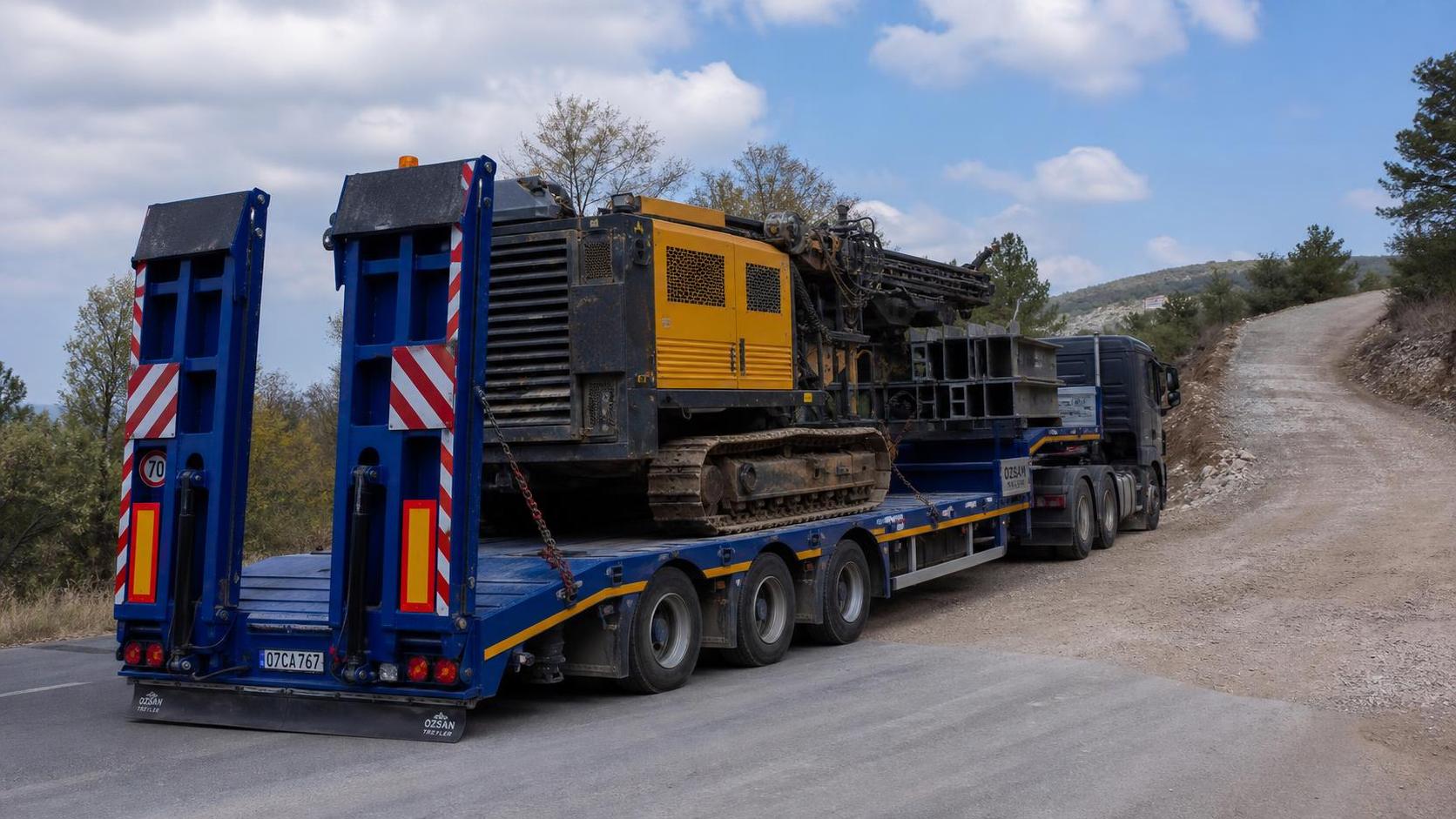
Payload rating must be treated as a structural limit, not a sales label. In engineering transport, the useful question is whether the trailer can carry the intended load repeatedly across the actual route profile without overstressing the frame, suspension, axle group, tires, couplings, or braking system. A trailer that appears adequate on paper can still be poorly matched if the cargo has a high point load, an uneven center of gravity, or a loading pattern that shifts under vibration. Selection starts with the real mass of the cargo, but it should quickly move to load distribution across the deck and into the running gear.
Static weight alone does not describe trailer demand. A steel component placed directly above the axle line creates a different stress pattern from a long machine with most of its mass forward of the kingpin or drawbar eye. Concentrated loads can introduce local deck deformation, cross-member fatigue, and excessive tire loading even when gross payload remains within the nominal range. For that reason, deck construction matters: main beam section, cross-member spacing, floor plate thickness, reinforcement around loading ramps, and gooseneck transition design all influence whether the platform is suitable for repeated engineering duty.
Reading Payload Beyond the Published Figure
Gross vehicle weight rating, tare weight, and legal operating mass should be read together. A lighter trailer may leave more payload margin, but weight reduction achieved through thinner sections or fewer reinforcements can become a disadvantage on broken pavement, quarry access roads, or temporary site routes. A heavier structure may reduce cargo capacity while improving fatigue resistance and deck stability. The correct balance depends on the cargo category. Transporting compact equipment, steel forms, pipe bundles, or stone-processing units produces different loading signatures even when the scale shows a similar total mass.
It is useful to separate payload assessment into three layers. The first is gross carrying capacity. The second is axle-by-axle load transfer during loading, turning, and braking. The third is localized force at contact points such as tracks, outriggers, pallet feet, or machinery base frames. Many selection errors appear at the third layer. A trailer may accept a uniformly distributed load yet perform poorly when carrying crawler equipment whose track pads apply force through a relatively narrow footprint. In those cases, timber mats, steel spreader plates, or a different deck arrangement may be necessary.
Load securement is part of payload evaluation, because tie-down forces also enter the trailer structure. Lashing rings, stake pockets, side rails, and front bulkheads should be placed where restraint loads can be transmitted into structural members rather than into thin outer plate. If the cargo requires chain binders at sharp angles, the attachment geometry should be reviewed before the trailer is specified. Otherwise, the platform may technically carry the weight while remaining impractical for compliant restraint under repeated field conditions.
Axle Setup Changes the Whole Behavior of the Trailer
Axle configuration is often reduced to axle count, yet the real performance difference comes from axle spacing, suspension type, equalization behavior, steering arrangement, and how the group interacts with the frame length. A tandem setup may be adequate for moderate deck lengths and more stable road surfaces. A tri-axle or larger group may spread load better, but it also introduces more tire scrub, more suspension components, and stronger demands on alignment. On tighter site roads, the added axle set can increase resistance in turns and accelerate wear on tires, bushings, and spring hardware.
Suspension choice deserves close attention. Mechanical leaf spring suspensions are common because of their simplicity, service familiarity, and tolerance for harsh duty. They can perform reliably where maintenance conditions are basic and where contamination from mud, aggregate, or water is frequent. Air suspension offers smoother ride quality and can reduce vibration transmitted to certain cargo types, but it adds valves, air lines, bags, and height-control components that need clean maintenance practice. On routes with sharp debris or frequent underbody strikes, the service environment should be considered before assuming air suspension is automatically the better technical option.
Equalization is another point that affects axle selection. On uneven terrain, the suspension should keep tire contact as consistent as possible across the axle group. Poor equalization means one axle may momentarily carry far more load than intended when crossing ruts, ramps, or diagonal surface changes. That overload may not be visible during static weighing. It often appears later as shoulder tire wear, cracked spring leaves, broken U-bolts, or abnormal hub temperature. Where route conditions include construction access roads or embankment approaches, suspension travel and articulation should be reviewed with the same seriousness as payload capacity.
Road Conditions Decide Whether a Specification Is Realistic
Trailer suitability changes dramatically between sealed highways, patched industrial roads, mine-adjacent haul links, and temporary project routes. A specification that survives long-distance paved transport may deteriorate quickly on corrugated surfaces or roads with repeated edge drop-off. Road condition affects not only speed and comfort but also dynamic loading, torsional twist through the frame, brake heat cycles, and fastener loosening frequency.
For smoother intercity routes, deck height, aerodynamic drag, and tare weight may receive more emphasis. Lower deck designs can improve loading convenience and cargo stability, especially for tall equipment. On rougher roads, additional ground clearance, stronger landing gear mounting, protected brake chambers, and reinforced wiring routing become more important. If the trailer must enter soft ground or unfinished staging areas, approach angle and breakover geometry should be checked, because deck contact during cresting can damage cross-members and floor sections long before a major structural failure is noticed.
Water, dust, and thermal cycling also belong in the road-condition assessment. Fine dust can shorten service life of slack adjusters, bushings, seals, and electrical connectors if protection is weak. Standing water accelerates corrosion in hidden beam cavities, suspension hangers, and air tank mounts. In regions with large temperature swings, weld zones and bolted joints may require closer inspection intervals because thermal contraction and expansion can aggravate existing stress concentrations. These are not secondary details; they affect maintenance planning and the realistic service interval of the trailer.
Frame Design and Material Choices Under Repeated Duty
Material grade matters, but frame geometry often matters more. High-strength steel can reduce mass, yet it requires disciplined fabrication quality, suitable welding procedure, and sensible detail design around holes, brackets, and transitions. A strong material cannot compensate for abrupt section changes or poorly reinforced cutouts. When examining a trailer for engineering transport, look closely at the neck area, suspension hanger zones, rear ramp mounting, and any point where accessory brackets interrupt the main load path. Fatigue usually begins where repeated stress meets an avoidable geometric discontinuity.
Cross-member spacing should reflect the load form. Close spacing benefits concentrated machinery loads and reduces floor flex between supports. Wider spacing may be acceptable for evenly distributed cargo but can lead to local deformation when track shoes or heavy pallets are loaded without spreaders. Floor material should also match expected abrasion. Chequer plate can improve traction, though plate thickness and support frequency determine whether it remains durable under repeated steel-on-steel contact. Timber inserts can reduce impact on certain cargo bases, but they need attention to moisture retention and fastener security.
Surface treatment is often overlooked during technical review. Paint system quality, edge preparation, drain provision, and access for cleaning all influence long-term structural condition. Hidden mud traps near suspension brackets or under side rails encourage corrosion where inspection is difficult. A trailer intended for harsh construction environments should be judged partly on how easy it is to wash, inspect, and repair without dismantling large sections of attached hardware.
Brake and Tire Matching Cannot Be Left to the End
Brake capacity must align with gross combination demand, terrain, and stop frequency. Long downhill sections, repeated low-speed stops at site entrances, and heavy cargo with poor aerodynamic drag all place different thermal loads on the braking system. Drum brakes remain common for their durability and familiarity, while disc arrangements may offer different heat and response characteristics depending on service practice. The choice should be tied to operating conditions, parts availability, and inspection discipline rather than preference alone.
Tires translate every selection decision into road contact. Axle setup, inflation control, alignment accuracy, and route surface determine whether the tire package works or fails early. Engineering transport often includes mixed surfaces and occasional overload temptation at individual wheel positions. That makes load index, casing quality, tread pattern, and heat resistance especially relevant. A trailer carrying dense loads over short rough routes may need a different tire specification from one carrying lighter but taller equipment at highway speed. Sidewall damage risk, shoulder scrub in turns, and puncture exposure should all be considered before finalizing the wheel-end package.
Common Misreadings During Evaluation
One frequent mistake is comparing trailers only by deck length and nominal tonnage. That approach ignores where the weight sits, how the suspension equalizes, and whether the route introduces repeated torsion. Another mistake is assuming more axles always create a safer or stronger platform. Additional axles can improve distribution, but they can also complicate maintenance, increase tire scrub, and create packaging constraints around ramps, underbody supports, and turning radius.
A further misreading appears when evaluation is done on a clean yard with an unloaded chassis. Ride height, landing gear position, brake line routing, and rear overhang vulnerability may look acceptable while parked, then become problematic under actual load on uneven ground. Where possible, technical review should include the loaded geometry: kingpin load transfer, axle spacing relative to cargo center, tire deflection, and rear structure clearance during ramp use. Without that step, the trailer may pass a visual review while retaining avoidable operational weaknesses.
Specification Work Should Follow the Transport Task, Not the Catalogue Layout
Selection becomes more accurate when the transport task is broken into a few concrete conditions: cargo footprint, true loaded mass, loading method, route surface, turning constraints, and maintenance environment. Once those are fixed, the trailer type usually narrows naturally. A lowbed may suit taller machinery where deck height control is necessary. A flatbed may remain practical for long fabricated sections or palletized heavy materials. A skeletal or specialized chassis only makes sense when the cargo form and handling process clearly support it.
Attention should also be given to interfaces between the trailer and the rest of the transport chain. Loading ramp angle affects whether tracked or wheeled equipment can board without bottoming out. Landing gear capacity and placement matter where uncoupling occurs on imperfect surfaces. Electrical connector protection matters where trailers are changed frequently in muddy yards. These details are easy to dismiss during paper comparison, yet they strongly influence uptime and workshop demand after deployment.
Where the operating profile includes uncertain road quality, conservative structural margin and simpler serviceable hardware often age better than a lighter specification optimized only for ideal highways. Where road quality is stable and cargo geometry is well controlled, a more weight-efficient design may be justified. The right answer comes from matching payload form, axle behavior, and surface reality in one specification, then confirming that the frame, braking package, and service arrangement can support that match over repeated cycles.
Search
Send Us A Message
Please give us a message
Xinfada Import & Export (Shandong) Co., Ltd.
Location