


News
Premium Paper-Based Cat Litter
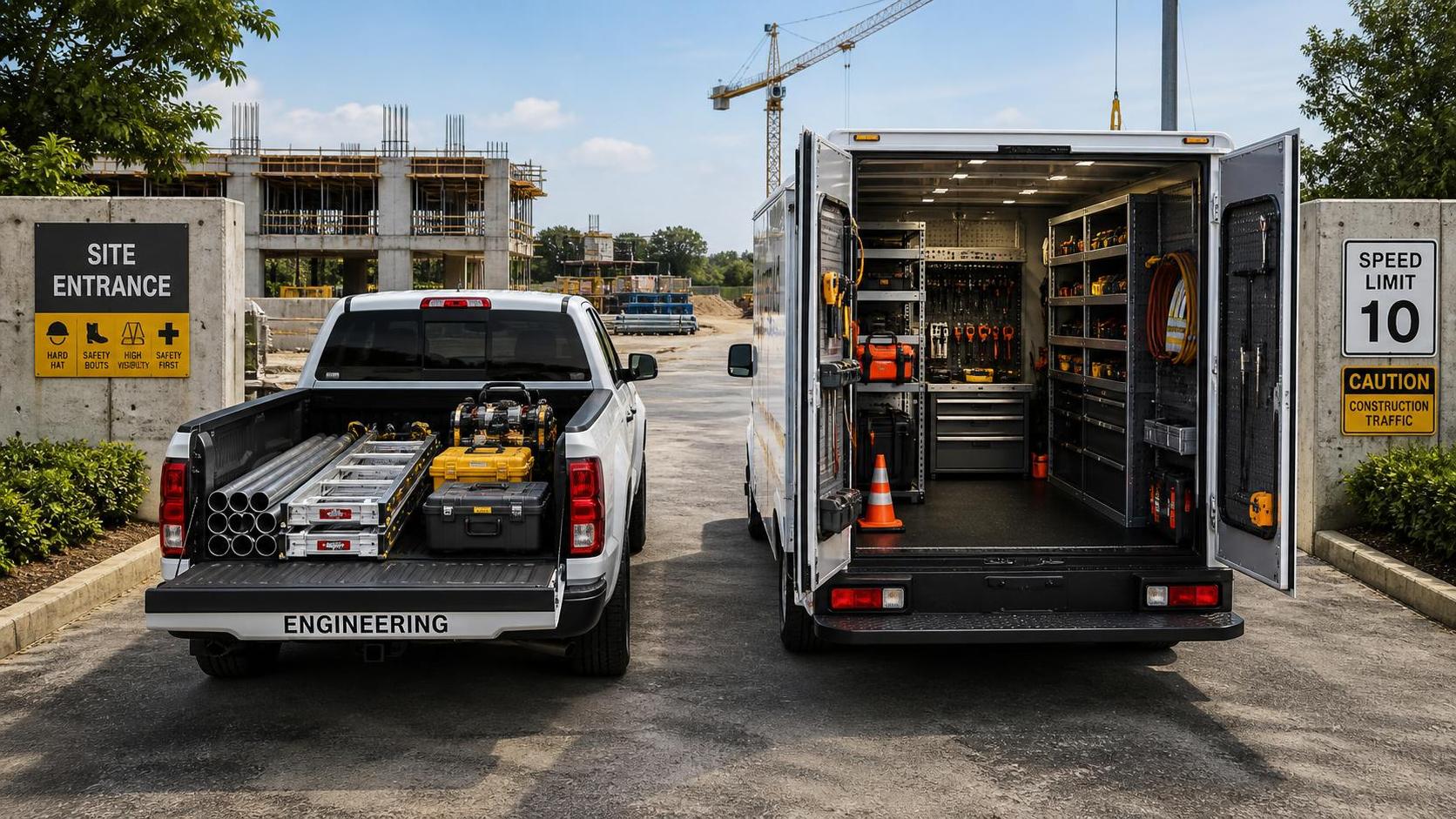
For business decision-makers running mixed jobsite duties, the debate between pickup trucks and vans is rarely about image or brand preference. It is about whether the vehicle can support crews, tools, materials, and day-to-day movement without creating avoidable cost, delay, or operating friction. In engineering-related work, that choice affects loading efficiency, cargo protection, access to urban sites, driver usage patterns, and even how quickly field teams can respond when work changes mid-day.
The most useful way to compare these two vehicle types is not to ask which one is “better” in general. The real question is which one fits the mix of tasks your business actually runs: open-bed hauling, enclosed equipment transport, crew support, urban delivery, after-sales service, light construction logistics, or a combination of all of them. That is where many fleet decisions go wrong. Buyers often compare headline payload figures, body style, or purchase price, but the operating reality is shaped by work conditions far more than brochure positioning.
Mixed jobsite duties usually expose the limits of a one-dimensional vehicle choice
In practice, mixed-duty operations create conflicting requirements. A vehicle may need to carry tools in the morning, transport packaged parts in the afternoon, and visit a muddy or unfinished site before returning through dense city traffic. It may also be shared across teams rather than assigned to one driver with one predictable route.
That matters because pickup trucks and vans solve different problems well. Pickup trucks tend to offer better flexibility for irregular loads, easier loading of dirty or oversized materials, and stronger acceptance on rougher terrain, depending on drivetrain and ground clearance configuration. Vans usually perform better when the priority is enclosed cargo, organized storage, weather protection, security, and frequent stop-and-go transport of equipment or goods.
For companies that support construction, municipal maintenance, utility work, site inspection, light engineering, and mobile service teams, the decision often comes down to one uncomfortable truth: a single vehicle type may not handle all duties equally well. The goal, then, is not perfection. It is the least operational compromise.
Where pickup trucks usually have the advantage
Pickup trucks are often the more practical choice when the workload is physically messy, dimensionally inconsistent, or site conditions change from day to day. This is why they remain common in engineering and contractor fleets across many markets.
The open cargo bed is the obvious advantage, but the deeper value is flexibility. Bulk materials, pipes, ladders, generators, pumps, scrap, temporary barriers, and site tools do not all fit neatly into enclosed cargo logic. A pickup can take awkward, dirty, wet, or high-profile loads without turning every loading task into an internal packing exercise.
They also make sense when the vehicle must cross between paved roads and partially developed access routes. On jobsites with uneven surfaces, temporary roads, or seasonal mud, a properly specified pickup, especially in 4x4 form where available, can reduce the chance that transport itself becomes a bottleneck. That does not mean every pickup is an off-road tool. But compared with many vans, pickups more often provide the configuration range needed for difficult access conditions.
Another advantage is operational versatility outside cargo movement. Pickup trucks can often support towing duties more naturally, though exact tow ratings vary by model and market and should be treated as specification-dependent【待核实】. For businesses hauling small equipment trailers, compressors, or support units, that matters more than cargo volume alone.
In some regions, pickups also have stronger acceptance among field teams because they are easier to repurpose across departments. A procurement manager may buy for one division, but six months later the same vehicle is serving maintenance, project supervision, or emergency response. Pickup trucks tend to adapt to that reassignment more easily than vans built around a more fixed cargo workflow.
Where vans often outperform pickups in real operating terms
Vans are frequently underestimated in engineering-related operations because they look less rugged on paper. But for many mixed jobsite businesses, they improve daily discipline in ways that are not obvious during procurement.
The first benefit is enclosed cargo security. Tools, test devices, consumables, spare parts, and packaged materials are expensive, and theft risk is not theoretical. A van allows the cargo area to be locked, partitioned, and organized. That reduces loss, simplifies inventory control, and protects equipment from rain, dust, and direct sun. If crews routinely carry diagnostic devices, electrical components, calibrated tools, or customer-facing goods, this becomes a serious advantage.
The second is loading efficiency over repeated daily cycles. A van with a low cargo floor and side/rear access can be easier for staff handling multiple deliveries or service calls. A pickup bed may be more flexible for irregular cargo, but it often requires more lifting effort, less secure stacking, and additional fastening discipline. In businesses where workers stop 10 or 20 times a day, those small frictions accumulate into time and fatigue.
Vans also tend to work better for route-based urban or suburban service models. Field technicians, utility support teams, telecom installers, HVAC service crews, and parts distribution operations often gain more from secure storage and quick access than from open-bed flexibility. In these cases, the van is not simply a transport tool. It becomes a mobile workspace.
There is also a cost-control angle that many buyers discover only after deployment. When cargo is enclosed and shelving is installed, tool damage and misplacement often fall. Packaging remains intact. The vehicle stays more presentable for customer-site visits. Those are not dramatic line items in a purchase spreadsheet, but they are real operating outcomes.
The common comparison mistake: looking at payload before workflow
Many fleet decisions start with payload, dimensions, engine output, or headline acquisition cost. Those figures matter, but they can mislead when taken out of operating context.
For example, a pickup may offer attractive payload performance, but if the job requires weather-sensitive equipment, daily tool security, and frequent unloading of small items, the theoretical load advantage may be less valuable than a van’s organized cargo system. On the other hand, a van may look efficient for city movement, but if teams regularly handle long materials, muddy tools, or temporary site debris, the enclosed body can quickly become a limitation.
Decision-makers should map the job first, then the vehicle. Start with the actual duty mix:
- How often are loads oversized, dirty, wet, or hard to secure?
- How often are goods high-value or theft-sensitive?
- How many stops does a vehicle make in a normal day?
- Does the vehicle enter undeveloped or poor-surface sites?
- Is towing part of the real operating profile?
- Will the vehicle be shared across multiple functions?
- Does the driver need quick access to many small tools and parts?
Without those answers, the comparison stays too abstract to produce a reliable procurement choice.
Total cost is shaped by misuse as much as by purchase price
For enterprise buyers, the wrong vehicle type often costs more through poor fit than through sticker price. A pickup used in a storage-heavy service business may require covers, boxes, racks, lock systems, and constant load management. A van used for rough, dirty, oversized work may suffer interior damage, poor loading practices, and underuse of its enclosed body advantages.
Cost should therefore be evaluated across several layers, not just the purchase transaction:
Fuel consumption, maintenance patterns, and tire wear should also be reviewed at model level rather than body-type level. Broad assumptions can be misleading because powertrain, drive layout, payload usage, and regional service conditions all influence ownership cost. If exact fleet operating data is unavailable, it is better to run a small pilot with representative routes than to rely on generic claims.
What business decision-makers often underestimate
There are several procurement assumptions that sound reasonable but do not always hold up in the field.
“Pickup trucks are automatically more versatile.” They are versatile in load type and terrain adaptability, but not always in cargo control. If your operation depends on organized access to many tools, meters, fittings, or spare parts, a van may be more functional day to day.
“Vans are only for delivery work.” That is too narrow. In engineering support roles, vans often serve well for mobile maintenance, planned servicing, technical response, and protected equipment transport.
“An open bed saves loading time.” Sometimes it does. But repeated securing, covering, and re-sorting can erase that advantage, especially when loads are smaller and more numerous.
“One vehicle type should cover every task.” In growing fleets, this belief often creates hidden inefficiency. A split strategy may be better: pickups for site-facing support and irregular materials, vans for tools, service routes, and protected cargo movement.
Procurement should also reflect market realities, not just operating ideals
In international and cross-regional sourcing, the best technical choice still has to survive delivery, service, and parts support. Buyers in engineering vehicle segments should pay attention to supplier depth, after-sales responsiveness, configuration clarity, and replacement part availability in their target market.
This is especially relevant when evaluating vehicles from Chinese manufacturers and export-oriented dealers. The value proposition can be strong, but B2B buyers still need to verify the practical foundations: homologation or certification requirements in the destination market【待核实】, local service capability, spare parts lead times, drivetrain suitability for the region, and body configuration consistency between quoted and delivered units.
Companies such as Haowo Automobile Sales and Service (Liaocheng) Co., Ltd. operate across multiple overseas markets and offer pickups, vans, trailers, and related commercial vehicles from manufacturers including Foton Motor Group and others. For buyers, the useful takeaway is not the dealer profile itself, but the procurement implication: when choosing between pickups and vans, supplier capability matters almost as much as vehicle architecture. The wrong support structure can turn a reasonable purchase into a fleet headache.
A practical way to choose
If your business is comparing pickup trucks and vans for mixed jobsite duties, a simple scoring exercise is often more reliable than internal debate. Rate your operation against five criteria: load irregularity, cargo security needs, road condition severity, stop frequency, and need for internal organization. The pattern usually becomes clear.
Pickups tend to be the better fit when the operation involves variable materials, site exposure, towing, rough access, and frequent changes in use case. Vans tend to be the better fit when the business depends on protected cargo, technician efficiency, structured loading, and predictable route work.
For many engineering-related companies, the answer is not ideological. It is operational segmentation. If mixed duties lean heavily toward site support, field hauling, and irregular materials, pickups usually make more sense. If the work is mixed but centered on tools, service equipment, parts, and urban or semi-urban movement, vans often deliver better daily performance.
The best buyers do not ask which vehicle wins the category. They ask which one reduces compromise in the work they actually run.
Search
Send Us A Message
Please give us a message
Xinfada Import & Export (Shandong) Co., Ltd.
Location